
In 2026, AI is fundamentally reshaping software development. Building AI systems that perceive, plan, execute, and self-correct in complex environments is now an architectural imperative, moving beyond theoretical research.
At MindsCraft, our vision transcends basic Large Language Model (LLM) integration. We engineer autonomous, event-driven intelligence – systems operating with remarkable independence and resilience. This empowers developers to craft solutions of unprecedented scale and sophistication, shifting from simple prompts to multi-agent orchestration, from fire-and-forget tasks to robust sagas, and from monolithic AI calls to granular, local-first processing.
Join us as we explore MindsCraft's blueprint for AI-driven development in 2026, detailing the core patterns, frameworks, and foundational principles that transform ambitious concepts into production-grade reality.

The New Paradigm: Autonomous Agents in Action
The leap from a "chatbot" to an "autonomous coding assistant" is monumental. Early LLM applications often struggled with complex, multi-step tasks due to being monolithic. In 2026, intelligence is distributed: an ecosystem of specialized agents, each mastering a distinct phase of the software development lifecycle, orchestrated to achieve high-level goals.

MindsCraft embraces a multi-agent decomposition mirroring a high-performing human development team:
The Planner: Strategist, breaking high-level requirements into actionable tasks.
The Coder: Craftsman, generating new implementation logic based on the plan.
The Tester: Quality engineer, executing code, running tests, and identifying bugs.
The Executor: Operational arm, running commands and managing environments for testing.
This decoupling is an engineering imperative, allowing independent optimization and robust feedback loops, essential for true autonomy.

Key Takeaway: Shared State & Deterministic Outcomes
Central to multi-agent orchestration is a shared, immutable state object – a single source of truth. Since LLMs are probabilistic, MindsCraft enforces strict data contracts via JSON Schema to achieve deterministic outcomes.

When the Coder generates code, we require a structured object with file path, code content, and explanation. Schema enforcement ensures reliable parsing by downstream agents, reducing "hallucination surface area" and bolstering system integrity. This differentiates a demo from a production-grade system.
Architecting for Resilience: Event-Driven AI Agents
Production AI agents demand unwavering reliability. Traditional polling is unsustainable at scale; in 2026, event-driven architecture is foundational for robust AI agent systems.
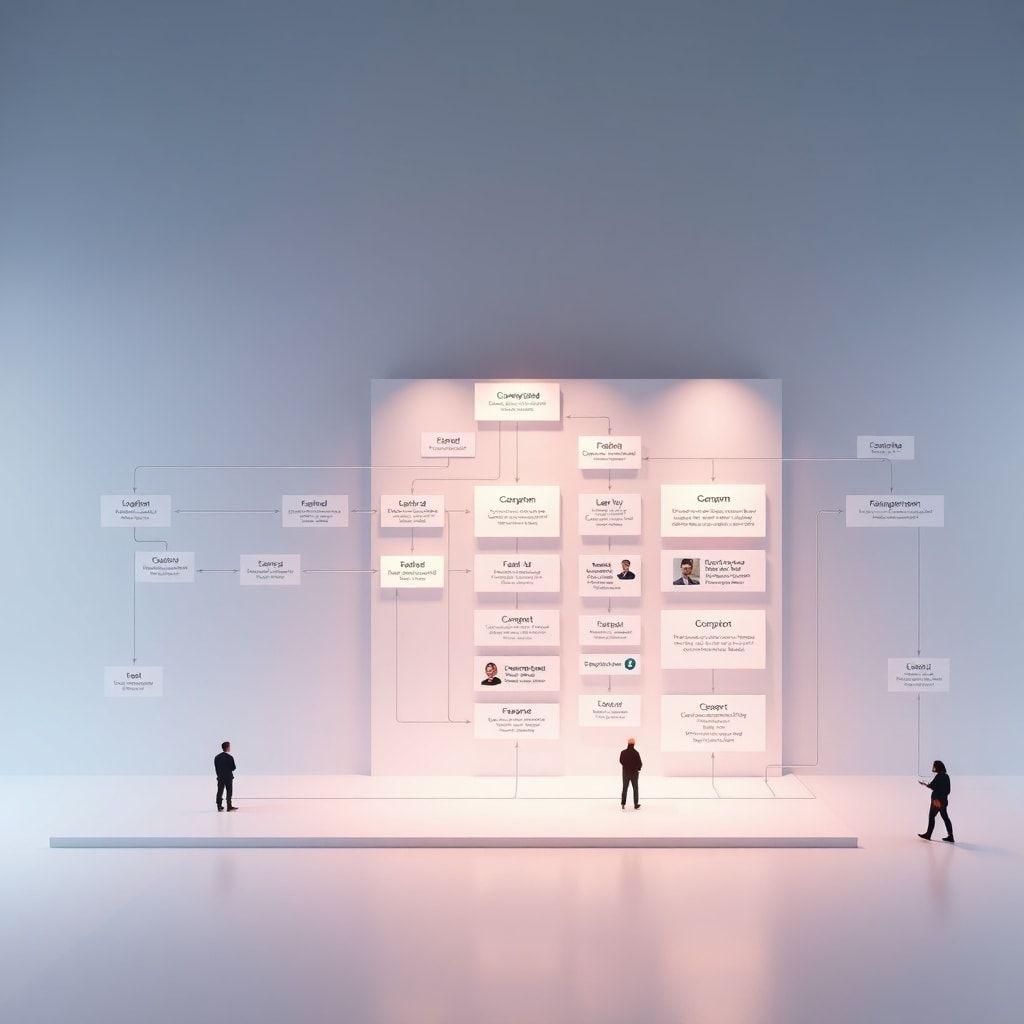
MindsCraft engineers AI agents that react, not wait. Events trigger immediate actions, like an agent running smoke tests after a deploy, or orchestrating onboarding after a customer signup. This responsiveness and resilience are driven by event-driven design.
Core patterns we leverage:
Queue + Workers: Events flow into a queue, processed by stateless worker agents. This ensures FIFO, guaranteed delivery, and horizontal scalability for high-throughput tasks.
Fan-Out: A single event triggers multiple independent agents simultaneously (e.g., "customer.signup" triggering email, provisioning, and CRM updates), preventing bottlenecks.
Saga Pattern: Indispensable for long-running, multi-step workflows spanning external services. If a step fails, a saga orchestrates compensating actions, ensuring atomicity and preventing inconsistent states, critical with LLM calls or external API points of failure.
Technical Deep Dive: Event Sourcing for Auditing AI Decisions
For high-stakes AI, knowing what your agent did and why is paramount. MindsCraft advocates Event Sourcing: every state change, agent decision, and LLM call output is recorded as an immutable event in an append-only store, creating a complete, replayable audit trail.

To answer "why did your agent reject my application?", we reconstruct the exact sequence: "application received" → "credit analyzed" → "decision made". A
parent_event_idensures traceability, and a cryptographicchecksumon each event ensures integrity. This transforms AI into an auditable, accountable entity.
The Unseen Foundation: Reliability Engineering for AI Systems
Intelligent agents depend on reliability. MindsCraft embeds robust reliability engineering directly into AI agent architectures, preventing "silent job loss" and ensuring operational continuity.

Retries with Exponential Backoff and Jitter: For transient failures, our agents use exponential backoff with randomized jitter. This prevents "thundering herd" problems, handles intermittent issues, and smooths load on upstream services.
Dead Letter Queues (DLQ): For non-transient errors or exhausted retries, events route to a DLQ. This safety net allows manual investigation, prevents silently dropped tasks, and provides critical visibility into systemic issues.
Structured Logging with Correlation IDs: To debug complex event-driven systems, we use comprehensive structured logging. Every event, decision, and LLM interaction is logged with rich metadata and a
correlation_id. This ID propagates, enabling full traceability and rapid issue pinpointing.

MindsCraft's AI Engineering Blueprint (2026) vs. Naive AI (Legacy)

MindsCraft's approach prioritizes resilience:
Specialized multi-agent orchestration vs. monolithic LLM calls.
Persistent, atomic task queues vs. in-memory queues.
Event-driven reactivity vs. polling for state changes.
Exponential backoff + jitter & DLQs vs. basic retries.
Structured logging with correlation IDs vs. limited, unstructured logging.
Event Sourcing for auditable decision trails vs. high risk of silent job loss.
Framework-agnostic patterns for portability vs. direct API integration with vendor lock-in risk.
Optimizing the AI Development Workflow: Local-First and Context-Awareness
Cloud AI faces challenges with cost, privacy, and "context window fatigue." MindsCraft integrates cloud intelligence with local-first processing and deep context-awareness for effective AI.
The issue isn't just expensive, private cloud processing of entire repositories; it's also AI assistants missing the "big picture" due to operating on snippets. Our methodologies emphasize:
Local-First Processing: Sensitive codebases stay local. Tools for initial indexing and structural analysis ensure data sovereignty and reduce privacy risks.
Surgical Context Feeding: Instead of feeding entire codebases, we intelligently extract and feed only *relevant* snippets. This approach, which can reduce token consumption by up to 80%, optimizes cost and performance.
Architectural Intelligence: AI must understand code *structure*. Tools that build a "structural map" (imports, exports, routes) empower AI agents to make informed decisions, minimizing irrelevant suggestions and boosting velocity.
This blend allows developers to leverage LLMs without compromising cost, privacy, or the nuanced understanding required for complex systems. It positions AI as an intelligent, context-aware partner.

The MindsCraft Vision for 2026 and Beyond
The 2026 future of software development is AI-driven, focused on meticulous engineering, disciplined architecture, and reliability, not magic.

MindsCraft is building this future now: engineering autonomous agents with specialized roles, orchestrating resilient event-driven workflows, ensuring auditable transparency with event sourcing, and maintaining operational integrity through advanced reliability. We empower developers with intelligent, privacy-preserving tools that amplify capabilities.
Effective AI agents never drop an event, never leave a workflow half-finished, and can always trace precisely what they did and why. This is the MindsCraft promise: robust, intelligent, and truly autonomous software solutions for tomorrow's complex demands.
Explore MindsCraft's services to transform your development lifecycle with cutting-edge AI engineering.